
Pistons compress the charge, transmit combustion force and transfer heat. Aluminium pistons generally expand more than the cylinder bore, which makes piston-to-bore clearance, cooling and lubrication critical to stable operation.
Start from the left column: find the damage pattern you are actually holding. The middle column lists the causes worth checking first, in the order we check them. The right column is what has to be corrected — replacing the piston alone rarely ends the problem.
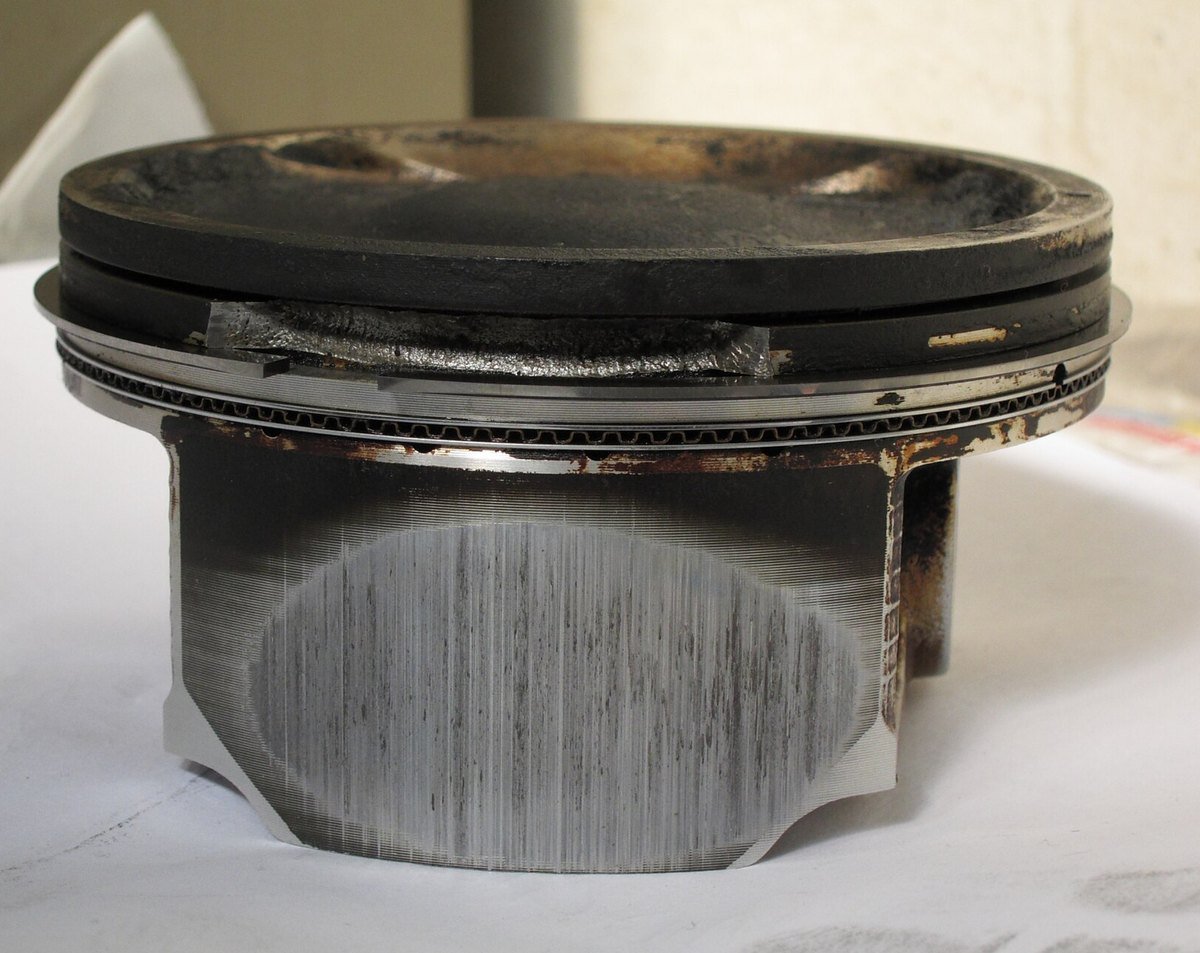
| Typical symptom | Priority root causes to check | Corrective focus |
|---|---|---|
| Retaining-ring loss; damage on both sides of the pin bore | Bent connecting rod; cylinder or crankshaft misalignment; distorted clip during installation; excessive crankshaft end play; abnormal pin-to-clip clearance. | Correct or replace the rod; verify block-to-crank alignment and crankshaft end play; install undamaged clips correctly. |
| Scoring around the pin boss or pin bore | Insufficient installation clearance between the piston pin and its boss or the small-end bushing. | Confirm piston-pin and bore grade; measure and, if necessary, re-machine the small-end bushing clearance. |
| Heavy skirt or thrust-side scoring, or seizure | Insufficient piston-to-cylinder clearance; distorted liner; inadequate cooling; failed oil film or fuel dilution. | Measure clearance to the manufacturer specification; machine or correct block and liner; inspect cooling, lubrication and injection systems. |
| Worn ring grooves or ring flutter | Excessive ring-to-groove clearance; new rings fitted to old pistons; wrong ring height; carbon build-up and overheating. | Pay close attention to the first compression-ring groove; use correct rings; remove deposits and restore heat transfer. |
| Melted crown or damaged first ring land | Detonation, lean mixture, over-advanced ignition, low-octane fuel, overload or combustion-chamber deposits. | Inspect fuel and ignition systems; use suitable fuel and spark plugs; control load and remove deposits. |
| Holed crown or damaged ring lands | Pre-ignition creating abnormal local temperature and pressure; hot spots, incorrect plugs, cooling faults and deposits can trigger it. | Fit the correct heat-range spark plugs; inspect cooling; remove deposits and correct valve and ignition settings. |
| Cracked crown or pin boss, or broken skirt | Thermal stress, mechanical overload, abnormal combustion, insufficient cooling or lubrication; continued operation after scuffing worsens the breakage. | Do not run with known damage; verify injection and ignition settings and clearances; follow break-in requirements and avoid heavy cold-engine load. |
| Piston-to-head or piston-to-valve contact | Loose rod bolts, excessive carbon, insufficient deck height, altered rod length, incorrect valve timing or valve float. | Check timing, piston protrusion and piston-to-head clearance; inspect rods, valve-seat depth and maximum-speed limits. |
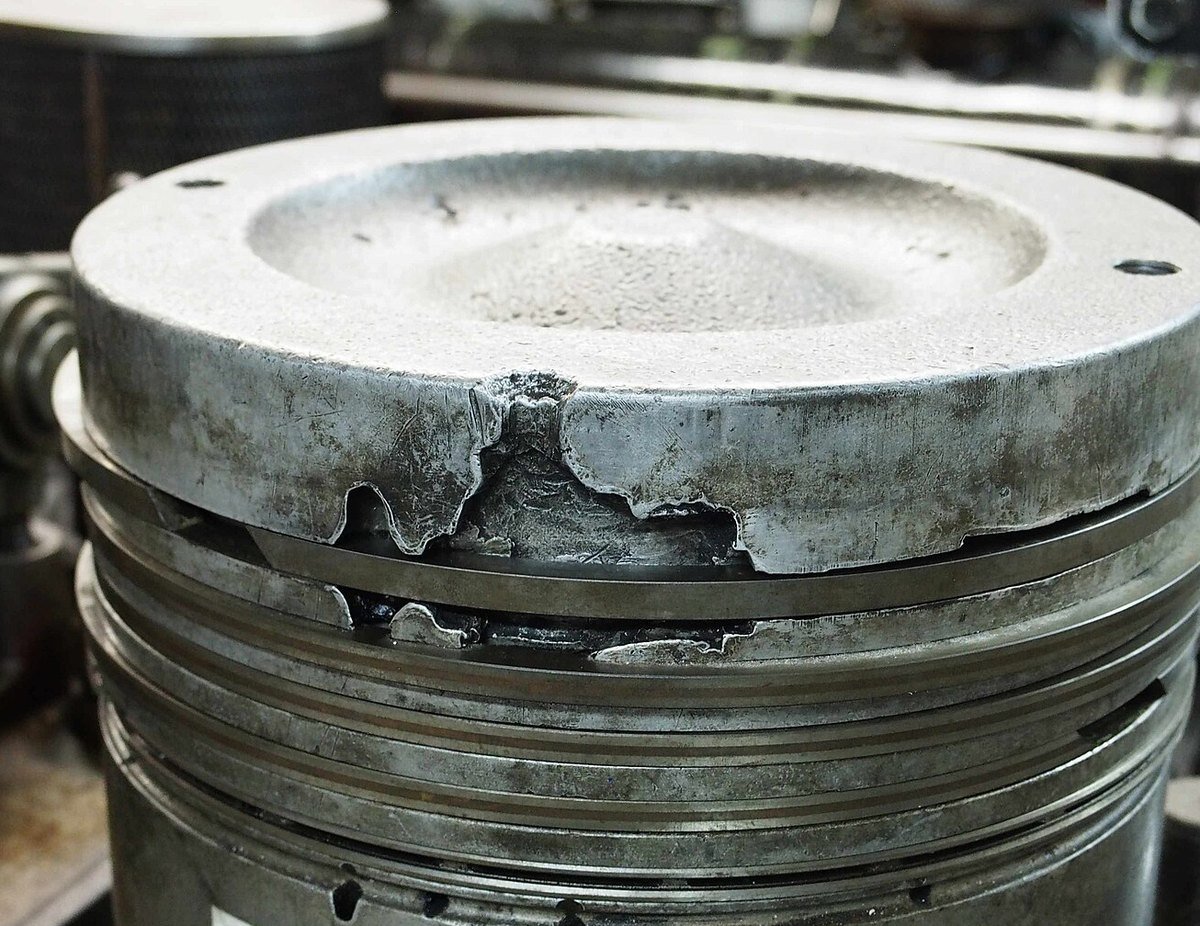
Cooling and injection: the two main paths to piston scuffing
Deposits in coolant passages, a blocked radiator, thermostat failure, a weak water pump, a loose fan belt, a faulty radiator cap or trapped air can all raise piston temperature and reduce running clearance. Excess fuel delivery, poor atomisation, leaking injectors or incorrect injection timing can wash the oil film from the cylinder wall and increase heat load.
If scoring develops in the direction of fuel spray, inspect the injection system first. If it is spread evenly around the bore, suspect cooling and clearance before you suspect the piston itself.
Before you order: measure the bore, confirm the piston grade and check the ring end gap. A piston that is correct in the catalogue can still be wrong for a block that has already been bored once.
Which part do you need?
Send us the engine model, the piston part number and a photo of the damage. We will tell you what else usually has to be replaced with it — pin, clips, rings, liner — before you commit to an order.